Available Time
Leave some parts of the day unfilled so children have time to move through boredom and into an idea of their own.
Unscheduled Space
A practical guide to creating more room for imagination, movement, conversation, problem solving, making, building, and independent discovery without turning screen-free time into another family rule to manage.
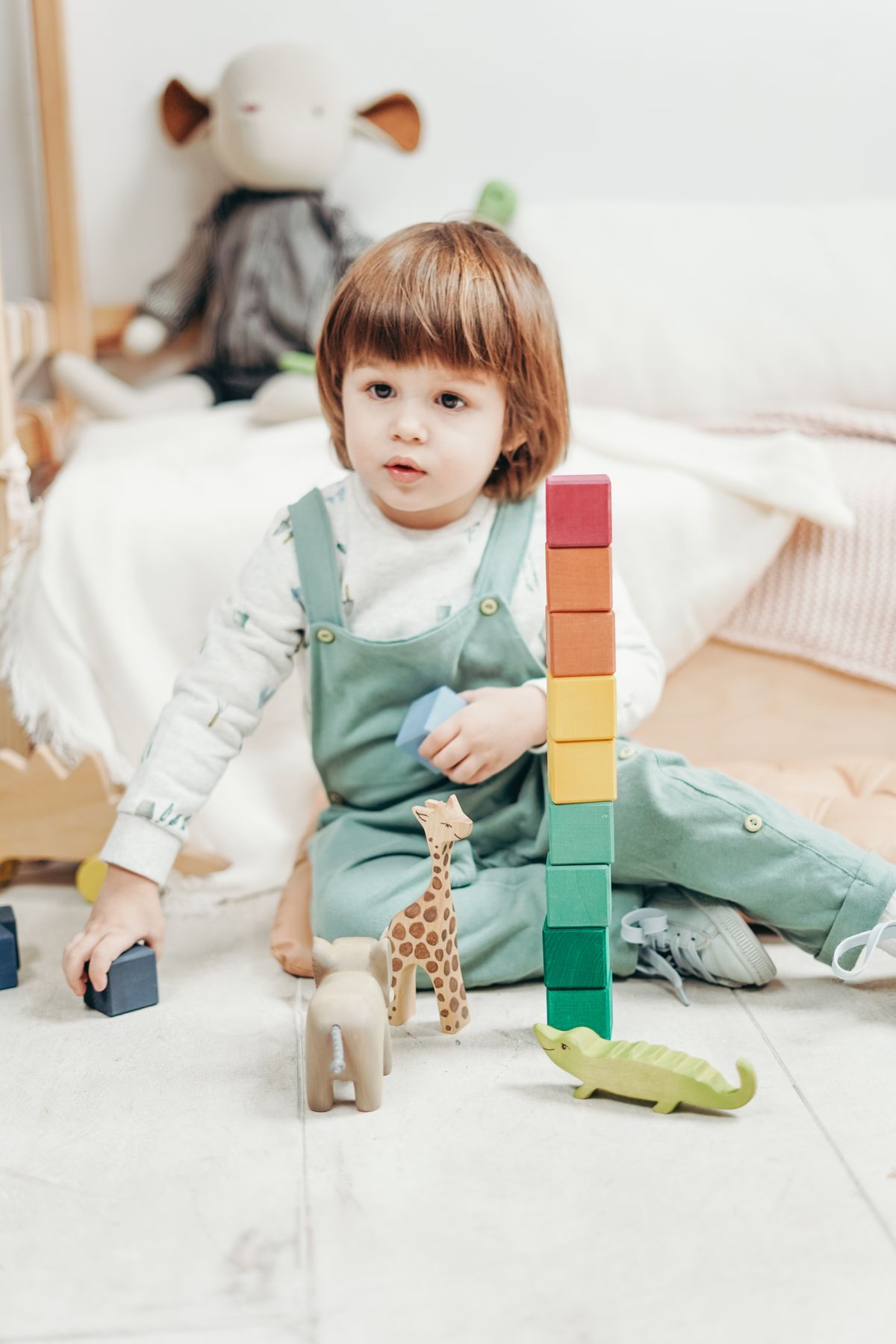
Screen-free play creates one of childhood's most useful conditions: enough open space for an idea to belong to the child.
When a child builds a tower, invents a pretend shop, sorts small objects, draws a plan, moves through a balance path, or experiments with a simple STEM material, there is no fixed storyline telling them what to notice next. The child has to choose, test, adjust, remember, imagine, and keep going.
Screen-free time does not need to mean removing technology from family life completely. It can simply mean protecting reliable windows where children know that other kinds of play are available, expected, easy to begin, and allowed to unfold without constant switching.
A strong screen-free routine is not built around constant entertainment. It is built around a small set of conditions that make child-led play more likely to happen.
Leave some parts of the day unfilled so children have time to move through boredom and into an idea of their own.
Keep a limited number of useful toys, books, puzzles, art tools, building pieces, and sensory materials within reach.
Let children return to the same puzzle, construction, sorting pattern, pretend scenario, or drawing idea many times.
Resist improving every idea. Sometimes the most useful support is staying nearby while the child decides what happens next.
Screen-free time is easier when it happens at familiar points in the day instead of appearing only as a sudden restriction.
Before passive entertainment enters the day, invite a practical routine such as dressing, breakfast help, a short puzzle, drawing, or a few minutes of building.
Put out one simple activity rather than many choices at once: sorting, stacking, alphabet matching, clay, blocks, a STEM challenge, or a sensory tray.
Use balance play, simple obstacle paths, active games, outdoor movement, carrying, stretching, hopping, or dancing to reset attention.
Leave a longer period without a defined task. Children can combine materials, invent pretend worlds, draw, build, sort, or simply decide what they want to do.
Shift toward books, puzzles, drawing, quiet construction, storytelling, learning clocks, sorting, or conversation.
Each idea can be scaled up or down depending on age, attention, and available materials. Keep the invitation simple and let the child decide how far to take it.
Use blocks, boxes, stacking pieces, or household materials to make roads, homes, towers, bridges, and spaces for pretend characters.
Spatial ThinkingGather safe objects and invite sorting by color, shape, size, texture, function, or a rule invented by the child.
Logic + ClassificationUse beads, blocks, shapes, colors, movement, sounds, or natural objects to create and continue repeating sequences.
Early MathSet out paper and a small selection of drawing or craft materials. Avoid giving a model to copy unless the child asks for one.
Creative ExpressionChoose a letter and look for it in books, packaging, labels, puzzles, alphabet cards, or familiar names around the home.
Alphabet AwarenessCreate a safe path using a balance toy, floor line, cushions, or low stepping points and add turns, pauses, and movement challenges.
Gross Motor PlayUse play food, small objects, paper money, number cards, bags, or baskets to explore counting, conversation, and role play.
Math + Social PlayAsk a simple question: Can you build something that rolls, holds, bridges, balances, protects, carries, or reaches?
STEM + PersistenceChoose three toys or objects and invent a story together with a beginning, a problem, a change, and an ending.
Language + Imagination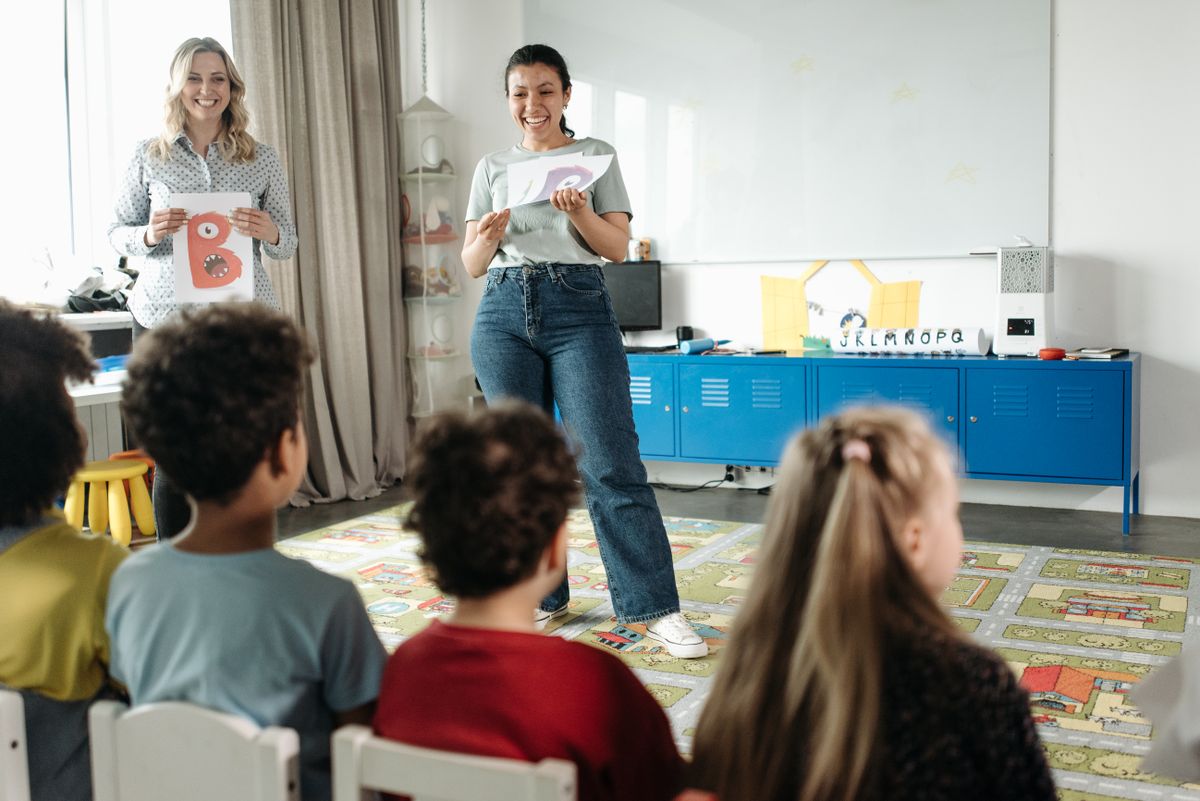
Children are more likely to choose screen-free activities when the environment does some of the work. The goal is not to create a perfect playroom. It is to make useful materials obvious, reachable, and easy to put away.
A varied screen-free week can include quiet concentration, physical movement, imagination, creativity, sensory exploration, language, practical routines, and early problem solving.
Building, stacking, connecting, arranging, balancing, and making structures from loose or modular materials.
Drawing, painting, cutting, shaping, collaging, crafting, and inventing objects without a single correct result.
Exploring texture, movement, weight, sound, shape, temperature, resistance, or repeated hand actions.
Balancing, stepping, hopping, carrying, stretching, dancing, navigating paths, and changing body position.
Songs, rhymes, letter matching, storytelling, pretend dialogue, sound games, picture talk, and shared reading.
Sorting, sequencing, counting, comparing, patterning, matching, solving puzzles, and testing strategies.
Creating shops, schools, homes, adventures, characters, jobs, imaginary environments, and flexible storylines.
Pouring, organizing, matching socks, setting a table, packing a bag, opening containers, measuring, and helping with routines.
The strongest screen-free collection is not the largest one. Aim for a balanced mix that supports language, thinking, creativity, movement, sensory discovery, and practical independence.
Letter matching, sound play, vocabulary, storytelling, and tactile early literacy activities.
Language + Sound AwarenessCounting, comparing, sequencing, early quantities, patterns, and everyday mathematical thinking.
Number Sense + LogicVisual matching, classification, spatial awareness, patterning, descriptive vocabulary, and recognition.
Visual ThinkingDrawing, making, cutting, assembling, creating, and practicing fine motor control through open-ended expression.
Creativity + Fine MotorBuilding, experimenting, predicting, testing, adjusting, comparing, and solving hands-on challenges.
Problem SolvingTouch, movement, repetition, texture, manipulation, focus, and calm exploratory play.
Sensory DiscoveryPractical tasks, self-correction, coordination, concentration, purposeful repetition, and independence.
Independent LearningActive movement, body awareness, controlled stepping, balance, coordination, and confidence.
Gross Motor PlayTime language, sequence, routines, number awareness, before and after concepts, and schedule understanding.
Time + RoutineClassification, sequencing, spatial reasoning, coordination, comparing, matching, and logical thinking.
Logic + CoordinationRather than changing the whole household routine at once, use five days to make screen-free play easier to start, easier to repeat, and easier to sustain.
Reduce visual overload and choose a small group of materials to keep visible.
Select one reliable part of the day for screen-free activity.
Use active play to help children regulate energy before quiet play.
Notice which activity your child returns to without prompting.
Build a realistic family rhythm from the parts that felt easiest.
Screen-free play works best when it fits real family life rather than becoming another standard families feel pressured to perform.
A child saying there is nothing to do does not always mean something is wrong. It may be the short transition between passive stimulation and self-generated play.
The most sustainable play invitations use materials that are already available and do not require a complicated adult-led presentation.
A favorite activity does not need to be replaced because it feels old to an adult. Repetition can deepen control, imagination, and confidence.
Children notice adults reading, making, cooking, organizing, drawing, fixing, moving, talking, and spending time away from screens too.
All questions are closed by default so families can open only the information they need.
No. Many families use technology as one part of daily life. The purpose of screen-free play is to protect regular opportunities for movement, imagination, conversation, hands-on learning, and independent play without constant digital input.
Start with a duration that fits your child and routine. Ten or twenty predictable minutes can be more useful than a long period that creates conflict. Over time, some children naturally stay with independent play much longer.
Keep the boundary simple and predictable, then make other choices visible. Avoid offering a long list of activities every time. Children may need a short period of dissatisfaction before they shift attention toward another kind of play.
No. Shared play is valuable, but children also benefit from periods where they control the direction of play. You can begin an activity together, stay nearby, and gradually step back when the child becomes engaged.
Try reducing choices rather than adding more. Rotate a smaller selection, combine familiar materials in a new way, move play to a different surface, or use a simple prompt such as building, sorting, making, or pretending.
No single product is required. Books, household objects, paper, containers, safe outdoor materials, practical routines, and imagination can all support meaningful play. Well-designed learning materials simply make certain kinds of practice easier to repeat.
Use a predictable play time, keep materials accessible, reduce the number of visible choices, begin with familiar activities, and stay nearby without directing every step. Independence usually grows gradually.
Open-ended materials often support longer use because they can be combined in different ways. Building sets, sorting materials, art supplies, puzzles, sensory tools, Montessori-style practical activities, balance toys, and pretend-play objects can all offer repeatable possibilities.
It can support many useful foundations, including sustained attention, communication, fine motor control, problem solving, turn-taking, persistence, independence, early literacy, number sense, and comfort moving between activities.
Weekends can include longer blocks for projects, outdoor movement, family games, making, building, pretend play, cooking, crafts, and practical tasks. Keeping one or two familiar screen-free windows can help the rhythm remain predictable.
Choose materials with flexible difficulty. One child might sort while another counts, one might build while another creates a story, or children can work on separate activities in the same space. Shared time does not require identical play.
Look for gradual changes rather than perfection: easier starts, longer periods of engagement, less adult direction, more imaginative use of materials, more frequent return to favorite activities, and smoother transitions away from screens.
Screen-free play is not about creating a perfectly unplugged home. It is about protecting enough quiet, choice, movement, repetition, and hands-on possibility for children to discover what they can do when the next idea has to come from them.

