01 / 05
Communication
Expressing needs, listening to short instructions, joining conversations, recognizing sounds, and enjoying books together.
Language + Listening
A calm, practical approach to helping children build confidence, independence, communication, early learning habits, and everyday classroom skills through purposeful play at home.
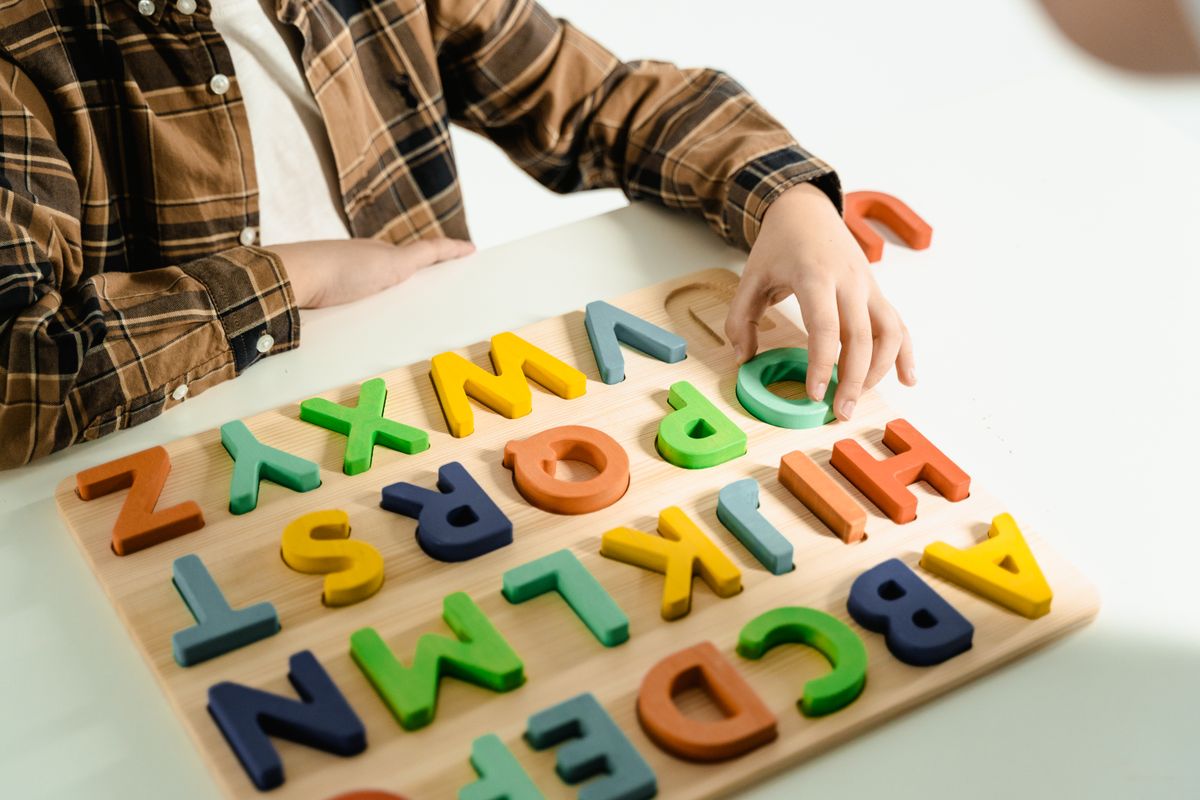
Being ready for school is less about knowing everything in advance and more about feeling capable enough to participate, explore, listen, communicate, and try.
Children enter school with different interests, experiences, and developmental timelines. A strong foundation can include recognizing familiar letters and numbers, but it also includes waiting for a turn, following a simple routine, asking for help, managing belongings, and moving from one activity to another.
At home, families can nurture these skills naturally through stories, conversation, sorting, building, drawing, movement, pretend play, simple responsibilities, and calm repetition. Progress matters more than perfection, and curiosity is one of the most valuable signs of readiness.
School readiness works best when families look beyond academics. These five areas overlap constantly and can be supported through simple, child-led experiences.
Expressing needs, listening to short instructions, joining conversations, recognizing sounds, and enjoying books together.
Noticing patterns, comparing quantities, sorting objects, solving simple problems, and developing number sense.
Managing basic personal tasks, putting materials away, making simple choices, and completing familiar routines.
Sharing space, taking turns, recognizing feelings, joining group activities, and recovering from small frustrations.
Building hand strength, balancing, coordinating movements, manipulating small objects, drawing, stacking, and cutting.
Think of these as helpful experiences rather than a pass-or-fail list. Children may be strong in one area while still developing another.
Practice listening to one- and two-step directions during familiar routines such as cleaning up, getting dressed, or preparing a snack.
Encourage children to describe what they notice, tell short stories, explain choices, and respond to open-ended questions.
Explore letters through names, environmental print, songs, matching games, magnetic letters, and tactile alphabet play.
Count real objects, compare small groups, notice numerals, build repeating patterns, and talk about more, less, same, first, and next.
Strengthen hands and fingers with stacking, sorting, threading, drawing, clay, puzzles, child-safe tools, and craft materials.
Build coordination through walking lines, balancing, hopping, climbing, stretching, catching, and other active movement.
Let children practice opening containers, washing hands, managing simple clothing, carrying belongings, and tidying up.
Use games, shared building projects, conversation, and family routines to make waiting and taking turns feel predictable.
Give gentle warnings before changes, use consistent cues, and practice moving from play to cleanup or from home to an outing.
Offer appropriately challenging puzzles, building tasks, and creative projects that invite a child to try a new strategy.
A predictable rhythm can make learning feel easier because the child knows what comes next. Keep activities short and leave room for free play, movement, rest, and connection.
Invite your child to complete one or two familiar self-care tasks, choose clothing from limited options, and help prepare belongings for the day.
Read together, explore alphabet cards, notice beginning sounds, retell part of a story, or talk about a picture in detail.
Count snack pieces, sort household objects, compare groups, make patterns, or match numerals with small quantities.
Balance, hop, stretch, walk a taped line, move like animals, carry lightweight objects, or create a simple obstacle path.
Offer paper, drawing materials, clay, simple craft tools, construction pieces, or an age-appropriate STEM challenge.
Ask one or two easy questions about the day: what felt fun, what felt hard, what the child noticed, and what they might want to try tomorrow.
These simple ideas combine early academic concepts with motor skills, conversation, independence, and problem solving.
Choose one familiar letter and look for it on books, packages, signs, labels, or alphabet pieces around the home.
Letter RecognitionCreate small groups of objects and match each group with a numeral card while saying the total together.
Number SenseUse sticks, blocks, tiles, or craft materials to build simple shapes and compare their sides, corners, and sizes.
Shapes + Spatial ThinkingSort objects by color, material, size, shape, or function, then ask your child to explain the rule they chose.
Logic + VocabularyCreate a safe line or low path and invite slow walking, turns, pauses, tiptoe steps, and controlled changes of direction.
Balance + CoordinationGive your child a simple challenge such as building a bridge, tower, ramp, container, or structure from available materials.
STEM + PersistenceUse a learning clock to connect familiar events with time words such as morning, afternoon, before, after, first, and later.
Time + SequencingExplore safe sensory materials and ask the child to describe textures, temperatures, sounds, movement, and preferences.
Sensory LanguageAfter drawing, crafting, or building, invite the child to explain what they made, how they made it, and what they might change.
Creativity + Communication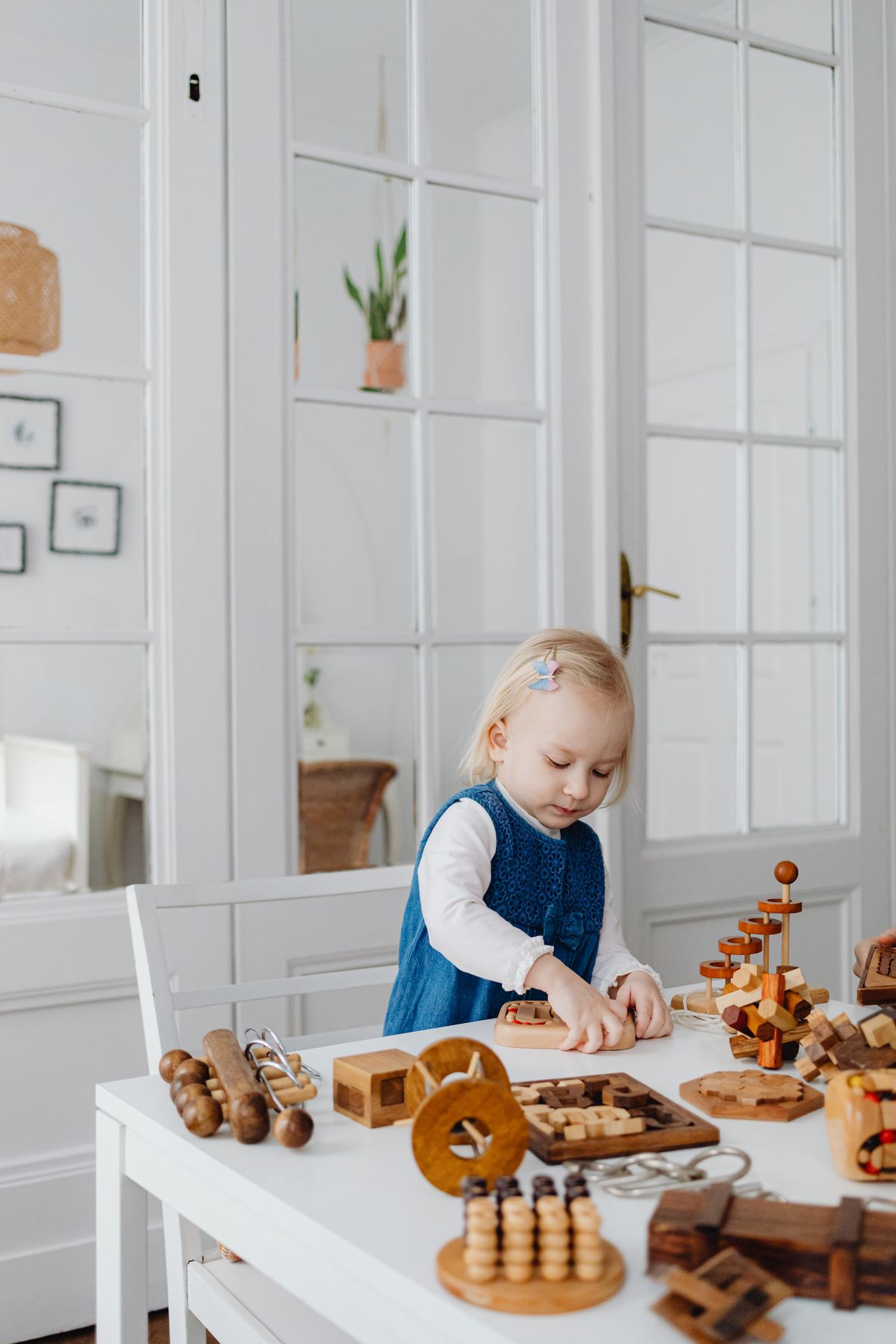
A school-ready environment does not need to look like a classroom. It simply needs to make useful materials accessible, choices manageable, and cleanup predictable.
Different materials support different dimensions of readiness. Rotate across language, numbers, creativity, movement, sensory exploration, problem solving, and practical routines.
Support letter familiarity, sound awareness, early vocabulary, matching, and playful preparation for reading.
Language FoundationExplore counting, quantity, sequencing, comparing, patterns, early operations, and practical number concepts.
Early NumeracyBuild visual discrimination, descriptive language, matching, classification, spatial awareness, and pattern recognition.
Visual ThinkingEncourage creative thinking while strengthening grip, hand-eye coordination, planning, and confidence in self-expression.
Creative DevelopmentInvite experimenting, building, observing, predicting, adjusting, comparing, and trying new strategies.
Problem SolvingSupport tactile exploration, descriptive language, focused attention, fine motor control, and calm open-ended discovery.
Sensory ExplorationEncourage independent choice, purposeful repetition, practical problem solving, order, coordination, and concentration.
Independent LearningDevelop body awareness, controlled movement, coordination, confidence, balance, and spatial judgment.
Gross Motor ConfidenceConnect time language with real routines and explore sequence, schedule awareness, before-and-after thinking, and numbers.
Routine AwarenessStrengthen classification, visual comparison, sequencing, coordination, spatial reasoning, and early problem solving.
Logic + CoordinationUse this as a gentle observation tool. Children do not need to master every item before school, and development can vary significantly from child to child.
Choose a few small goals each week and revisit them naturally. Repetition builds familiarity, while playful variation keeps the experience engaging.
Begin with predictable household tasks and short listening games.
Focus on stories, letter awareness, conversation, and sound play.
Bring early math into snacks, toys, steps, sorting, and routines.
Strengthen hands through practical tasks and creative materials.
Build confidence around turn-taking, feelings, and shared activity.
Combine routines, confidence, and independence into realistic practice.
Familiarity can reduce uncertainty. Practice the rhythm around school without turning the final weeks into a high-pressure preparation program.
Introduce the idea of school through calm conversation and realistic routines.
Keep the start of the day predictable, calm, and as unhurried as possible.
Children may need connection and decompression before talking about their day.
Readiness grows through ordinary days. A sustainable approach protects play, connection, and confidence while giving useful skills time to develop.
Five focused minutes can be more useful than a long activity that becomes frustrating or forced.
Repetition builds fluency. A child choosing the same puzzle, story, sorting task, or song is often practicing deeply.
Show how to begin, pause, fix a mistake, ask for help, clean up, and try again rather than expecting immediate independence.
Look for small changes in attention, confidence, communication, coordination, persistence, and willingness to participate.
Every question below is closed by default so families can open only the information they need.
No. Children begin school with a wide range of early literacy experiences. Enjoying books, listening to stories, noticing letters, playing with sounds, and communicating ideas can all contribute to a strong literacy foundation.
Short sessions are usually enough. Try brief activities of roughly five to twenty minutes depending on the child and the activity, then return to free play, movement, conversation, meals, outdoor time, or rest.
Interest naturally varies. Shorten the activity, simplify the challenge, offer fewer materials, connect it to an existing interest, or stop and revisit it later. Engagement is more useful than forcing a fixed duration.
Prioritize routines that affect everyday participation: listening to simple directions, asking for help, handling belongings, basic self-care, cleanup, turn-taking, transitions, and confidence separating from a caregiver.
Worksheets can be one optional tool, but they are not required. Many readiness skills develop effectively through books, conversation, puzzles, sorting, building, drawing, movement, pretend play, crafts, sensory exploration, and practical tasks.
Choose one manageable responsibility at a time. Model the task, practice together, make the environment accessible, and allow extra time. Independence grows through repeated opportunities, not through expecting immediate mastery.
Keep explanations concrete, practice relevant routines, read stories about school, acknowledge questions, maintain calm and predictable goodbyes, and avoid overwhelming the child with too many details at once.
No single product is necessary. Thoughtfully selected learning materials can make certain skills easier to practice, but everyday objects, books, conversation, household routines, movement, art materials, and imaginative play are also valuable.
A useful challenge usually requires attention or a few attempts without causing sustained frustration. If a child can complete it instantly, add a small variation. If the task causes repeated distress, simplify it or return to it later.
Use activities with different possible roles. One child might sort while another counts, one might build while another describes, or siblings might take turns selecting materials. Keep expectations appropriate for each child.
Development is not perfectly linear. A child may show strong language skills while still building motor control, or may be confident with numbers while needing more support with transitions. Continue observing overall progress rather than expecting every area to develop at the same pace.
Notice specific effort: waiting patiently, trying a second strategy, remembering a routine, putting materials away, explaining an idea, or persisting with a challenge. Specific recognition helps children understand what they are learning.
A child does not need to arrive at school knowing everything. The most useful preparation is often a growing sense of confidence: I can listen, I can try, I can ask, I can participate, and I can learn what comes next.

